Evergreens and Grasses for Low-Maintenance Privacy
Thinking about evergreens and grasses instead of a fence? Here’s how we design low-maintenance living privacy screens that look good year-round.
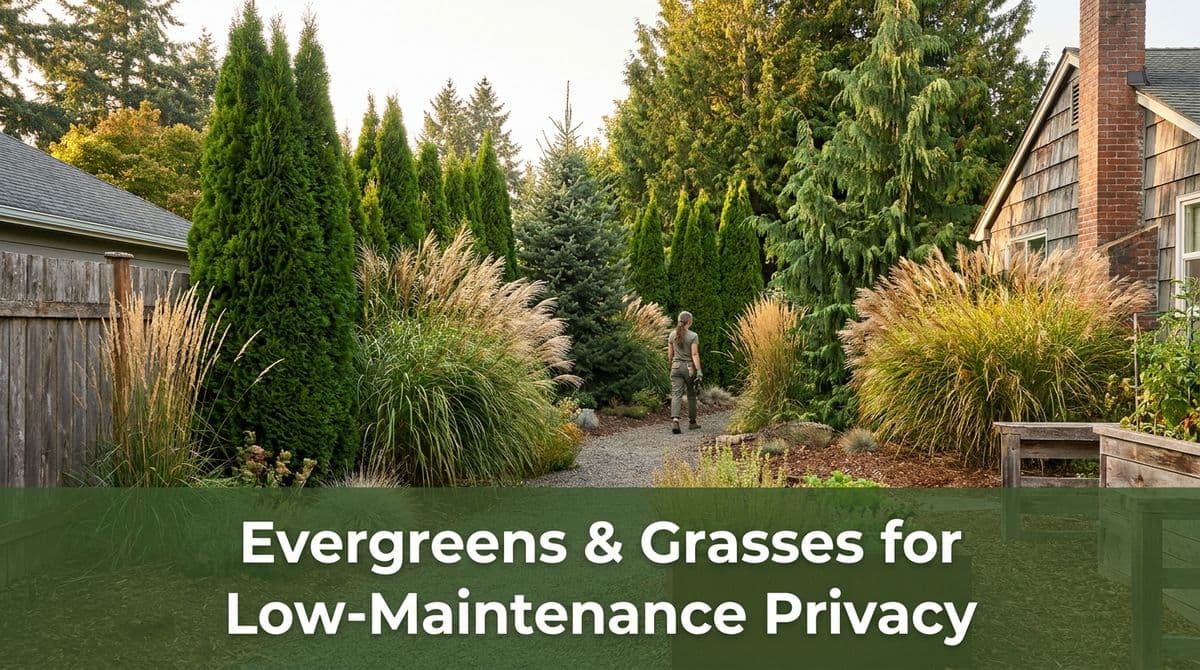
How We Turned an Awkward Side Yard into a Green Privacy Screen
We recently got a call from a homeowner — let's call her Sarah — who was feeling pretty frustrated with her side yard. The lot was set up in a way that was, in her own words, “a terrible design that’s really hard to water and maintain.” On top of that, a row of modular houses had gone in right next door, and suddenly her living room looked straight into the neighbors’ windows.
Sarah didn’t want a big, harsh fence. Instead, she asked us about using solid evergreen trees and Carl Foerster ornamental grasses to build a soft, green privacy screen that wouldn’t eat up her weekends with maintenance. We walked through the same advice on the phone that we’re sharing here, because a lot of homeowners are in Sarah’s shoes.
Why Choose Evergreens and Grasses Instead of a Fence?
When Sarah called, she already had a rough idea: a line of 6–8 foot evergreen trees with a band of ornamental grasses in front. She wanted to block the view of the modular homes, soften the side yard, and keep the future option open for expanding a deck.
We see that combination work really well for a few reasons:
- Year-round screening: Evergreens give you privacy in all four seasons; no waiting for leaves.
- Movement and texture: Grasses like Carl Foerster add motion and softness so it doesn’t look like a rigid wall.
- Lower maintenance than a lawn: Once established, trees and grasses usually need far less care than turf.
- No fence permits or HOA drama (usually): Plants are often easier to get approved than a tall fence. (Always check your local rules.)
For Sarah, this approach gave her privacy now, and flexibility later if the deck plan changed and we needed to adjust tree placement or add more plants.
Choosing Evergreen Trees for a Living Privacy Wall
On the call, we talked about a ballpark price for 6–8 foot pines, which for our area typically run around $500–$600 per tree installed. That includes sourcing, delivery, planting, soil amendments, and initial staking as needed.
When we help design a privacy screen, we ask homeowners to think about:
- Desired height: How tall does the screen need to be to block what you actually see from your windows or deck?
- Mature spread: A tree that’s 3 feet wide now might be 10+ feet wide in a few years — we space for the future, not just today.
- Growth rate: Faster-growing evergreens fill in sooner but may need a bit more care and trimming.
- Sun and soil: Some evergreens tolerate wind, poor soil, or shade better than others.
We generally space 6–8 foot evergreens about 6–10 feet apart, depending on the species and how quickly the homeowner wants a solid wall. Closer spacing = faster privacy, but a bit more pruning later if they start to crowd.
Adding Carl Foerster Grasses for Softness and Style
Sarah was also interested in about ten 5-gallon Carl Foerster grasses. While we didn’t have that year’s exact plant pricing at our fingertips during the call, we knew they would be much less per plant than the trees and a great way to stretch the budget visually.
Carl Foerster (often labeled ‘Karl Foerster’) is a favorite for privacy screens because it:
- Stays relatively upright and tidy (usually 4–5 feet tall in bloom)
- Handles wind well and looks great next to evergreens
- Provides changing interest through the seasons with plumes and color shifts
For a layered look, we usually:
- Plant grasses in a staggered double row in front of the trees, about 18–24 inches apart.
- Leave a small mulch gap between trunk and grass to keep tree roots happy.
- Use 5-gallon sizes when homeowners want an “instant” effect, like Sarah did.
What a Low-Maintenance Privacy Planting Typically Costs
Sarah mainly wanted a ballpark number so she could compare options while she waited on a deck quote. Based on what she described — a row of evergreens, a band of grasses, and mulch to tie it all together — we estimated:
- Evergreen trees (6–8 feet): Around $500–$600 each installed.
- Ornamental grasses: Much less per plant; ten 5-gallon grasses are usually a modest part of the total.
- Mulch and bed prep: Often adds roughly $1,000 or so for a typical side-yard run, depending on size and access.
For a smaller privacy project like hers, we told her she’d likely be in the neighborhood of around $2,000 for plantings, and about $3,000 total with mulch and finishing. Every yard is different, but those numbers helped her decide whether to move forward with plants instead of a fence.
Design Tips for Tricky Side Yards and Future Decks
One of Sarah’s biggest concerns was that a future deck expansion could change everything. We see that a lot, so we usually design with flexibility in mind:
- Keep plants just outside likely deck footprint: We leave room so future posts, stairs, or railings don’t clash with tree roots.
- Use curves, not straight lines: A gentle curve in the planting bed often looks better and is easier to adjust if the deck changes.
- Plan irrigation access: Awkward side yards are often hard to water, so we think about drip lines or soaker hoses from the start.
For low maintenance, we also recommend:
- Thick mulch (2–3 inches): Suppresses weeds and keeps moisture where roots need it.
- Simple, consistent plant palette: One or two types of evergreens plus one grass variety keeps care straightforward.
- Clear edge between lawn and bed: A defined edge means less string trimming and a cleaner look.
How We Approach a Project Like This
When someone calls us with a situation like Sarah’s, here’s the general process we like to follow:
- Phone consult: Talk through goals (privacy, views, future deck plans, maintenance level, and budget).
- Site visit: Measure, check sun and soil, and mark key sightlines from windows and patios.
- Plant selection and layout: Choose evergreen species, spacing, and where to layer grasses.
- Install and mulch: Plant correctly, set up watering guidance, and finish with mulch.
If you’re staring at an awkward side yard or new neighbors and don’t love the idea of a fence, a living screen of evergreens and ornamental grasses can be a beautiful, low-maintenance alternative. We’re always happy to walk through options and help you figure out whether a planting wall like Sarah’s makes sense for your yard and your budget.